Sep 20, 2017
FOR IMMEDIATE RELEASE
September 20, 2017
IRAN: Mahvash Sabet, Religious Prisoner of Conscience, Released
USCIRF Vice Chairwoman Arriaga cites Sabet’s “courage in the face of persecution and dedication to her faith”
WASHINGTON, D.C. – The U.S. Commission on International Religious Freedom (USCIRF) welcomes the release of Iranian religious prisoner of conscience Mahvash Sabet, one of the seven imprisoned Baha’i leaders known as the “Yaran.” In 2008, all seven were arrested and sentenced to prison on false charges of espionage and “spreading propaganda against the regime.” Ms. Sabet has been released after serving her 10-year sentence under these false charges.
“Mahvash Sabet has been unjustly imprisoned under terrible conditions simply for daring to practice her religion and educate her fellow Baha’is. Mahvash’s courage in the face of persecution and her dedication to her faith are truly inspiring,” said USCIRF Vice Chairwoman Kristina Arriaga, who has advocated in support of Ms. Sabet and her fellow prisoner Fariba Kamalabadi. “While we welcome Mahvash’s release, the release of other imprisoned Baha’i leaders and all Iranian prisoners of conscience jailed for their religion or belief must swiftly follow.”
Vice Chairwoman Arriaga took up Ms. Sabet’s case as part of USCIRF’s Religious Prisoners of Conscience Project. Upon learning of this advocacy, Ms. Sabet’s family sent Vice Chairwoman Arriaga a piece of artwork that Ms. Sabet had made in prison (pictured above). Through the Religious Prisoners of Conscience Project, Commissioners work for the release of individuals who have been imprisoned for their religious identity, beliefs, practices, or advocacy and highlight the laws and policies that led to the imprisonment.
Since 1999, USCIRF has recommended, and the State Department has designated, Iran as a “country of particular concern” for the government’s systematic, ongoing, and egregious religious freedom violations. Since President Hassan Rouhani’s election in 2013 and reelection in May 2017, the number of individuals from religious minority communities who are in prison because of their beliefs has increased. These prisoners demonstrate the Iranian government’s callous disregard for the international human rights agreements that Iran has ratified.
USCIRF Chairman Daniel Mark stated, “The United States must continue to speak publicly and unequivocally against these religious freedom violations. In addition, the U.S. government should hold accountable Iranian government agencies and officials who perpetrate severe religious freedom violations by using all available tools against such perpetrators, including freezing their assets and denying them visas."
The U.S. Commission on International Religious Freedom is an independent, bipartisan U.S. federal government commission, the first of its kind in the world. USCIRF reviews the facts and circumstances of religious freedom violations abroad and makes policy recommendations to the President, the Secretary of State, and Congress. USCIRF Commissioners are appointed by the President and the Congressional leadership of both political parties. To interview a Commissioner, please contact USCIRF at [email protected] or John D. Lawrence, Director of Communications ([email protected]/ +1-202-786-0611).
Sep 28
Sep 28th 3:00pm
-
Sep 28th 4:30pm
Saudi Arabia: Failed Promises--Hate Speech and Intolerance Still a Problem
Staff Briefing
Thursday, September 28, 2017
3:00 pm – 4:30 pm
122 Cannon House Office Building
RSVPs are not required
Join Human Rights Watch (HRW) experts and USCIRF's Director of Policy and Research, Dwight Bashir, for a staff briefing on Saudi textbooks and intolerance and hate speech, including insights from the upcoming HRW report They Are Not Our Brothers: Hate Speech by Saudi Officials. This report will be available soon at www.HRW.org.
The Saudi government has promised to reform its curriculum and textbooks and recently has promoted the kingdom as a more open and tolerant country. Yet intolerant passages remain in textbooks and Saudi state clerics and institutions incite hate and discriminate against religious minorities. The Shi’a community in particular faces discrimination, with authorities interrogating, arresting, and imprisoning dissident Shi’a clerics and activists, despite some improved conditions for public worship in the Eastern Province. Saudi courts prosecute and imprison individuals for dissent, apostasy, and blasphemy, and use a law on blasphemy and another targeting the promotion of atheism against human rights defenders.
Since 2004, the U.S. Department of State has designated Saudi Arabia as a “country of particular concern,” or CPC, under the 1998 International Religious Freedom Act (IRFA) for engaging in systematic, ongoing, and egregious religious freedom violations. However, rather than sanctioning Saudi Arabia under IRFA, the State Department has waived any sanctions citing the “important national interest of the United States.”
Please join us for an exciting panel that will discuss the critical issue of Saudi government’s continued support of hate speech and incitement – including in its public education curriculum and textbooks – the consequences of such support, and actions the U.S. government can take to address this ongoing and serious problem.
Speakers include:
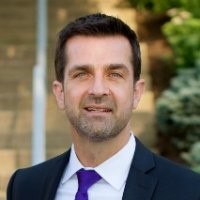 Dwight Bashir is the Director of Policy and Research at the U.S. Commission on International Religious Freedom. For more than 20 years, he has worked in the areas of international human rights, freedom of religion or belief, and conflict resolution. While at USCIRF, Mr. Bashir has led or participated in numerous fact-finding missions internationally and has traveled widely throughout the Middle East, Africa, and Europe.
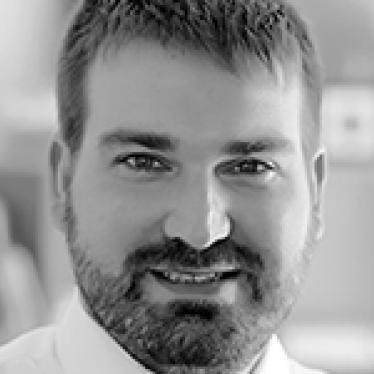 Adam Coogle is a senior researcher in Human Rights Watch’s Middle East and North Africa division. He is also the author of the recent Human Rights Watch report, “‘They Are Not Our Brothers’: Hate Speech by Saudi Officials.”
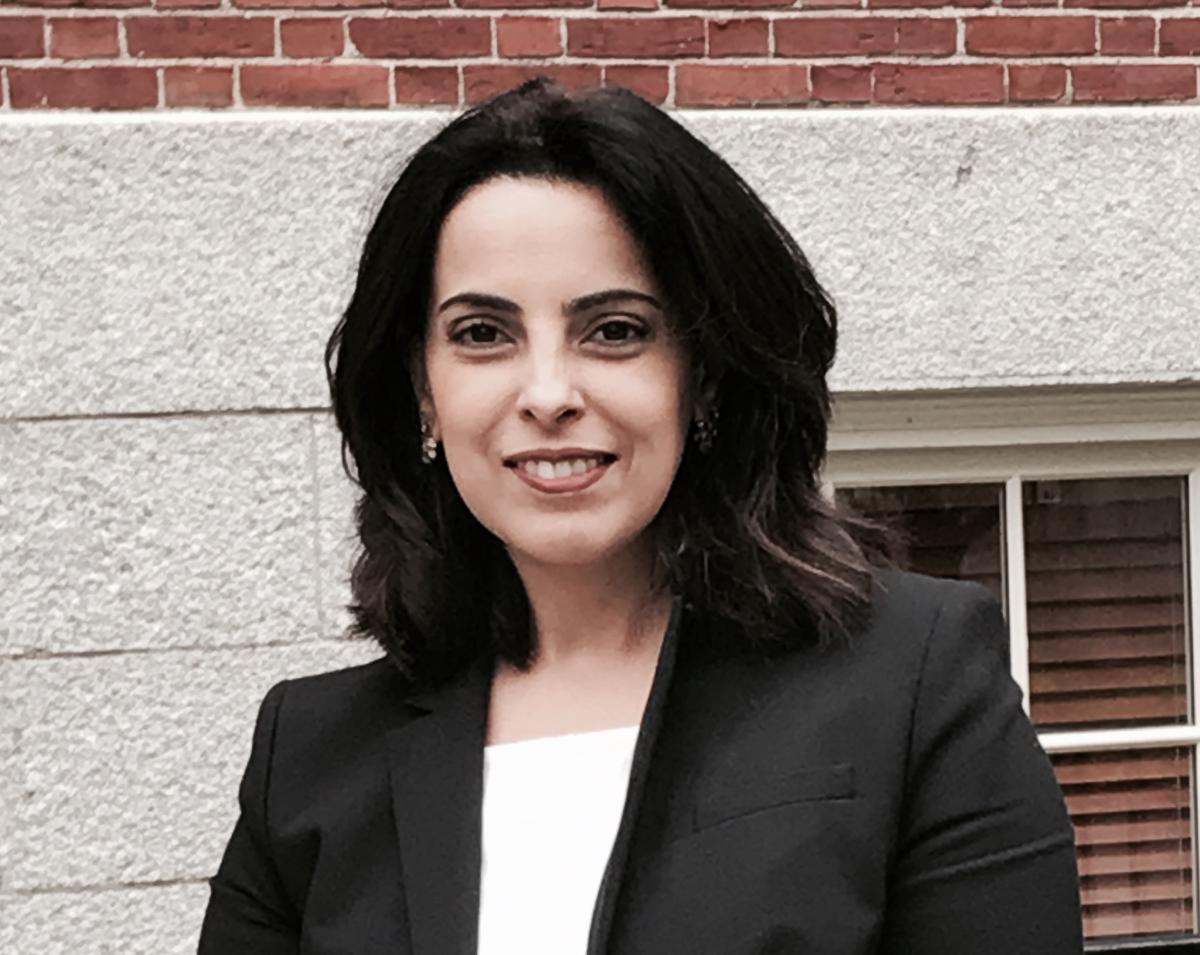 Hala Aldosari is a scholar of health and gender and a human rights activist from Saudi Arabia. She serves as an advisory board member for Human Rights Watch’s Middle East and North Africa division, as well as the Gulf Center for Human Rights. She is currently a fellow at Harvard University researching social determinants of women's health in Saudi Arabia.
Sep 18, 2017
The following op-ed appeared in The Hill on September 18, 2017
By former USCIRF Commissioners Sandra Jolley and Jackie Wolcott
Addressing religious freedom violations is always hard, but when killers roam free and government officials fail to even acknowledge the rights of religious minorities it becomes impossible. That is what we face in the Central African Republic (CAR). We traveled to CAR in May and found government officials apathetic at best to the needs of the country’s marginalized Muslims.
In late August, the United Nations aid chief, Stephen O’Brien, stated "The early warning signs of genocide are there. We must act now." With the U.S. ambassador to CAR having just left, the U.S. must also act to ensure that it remains engaged at this most critical time.
CAR has a long, sad history. A Christian majority country, fighting between Muslim and Christian militias has regularly occurred since the 2013 coup by the largely Muslim Séléka coalition. In response, the deposed president brought together the predominantly Christian “anti-balaka” to avenge the Séléka attacks. CAR remains fragile, susceptible to outbreaks of sectarian violence, and fractured along religious lines.
In 2015, the U.S. Commission on International Religious Freedom (USCIRF), on which we serve, determined that ethnic cleansing of Muslims had occurred and recommended that the U.S. government designate CAR as a Country of Particular Concern (CPC). CPCs represent the worst violators of religious freedom in the world. We made that same recommendation in 2016 and 2017.
The State Department, however, has yet to declare CAR a CPC.
The UN Commission of Inquiry on the CAR in 2014 found that 99 percent of the capital’s Muslims had left Bangui, 80 percent of the entire country’s Muslim population had fled to Cameroon or Chad, and 417 of CAR’s 436 mosques were destroyed. Since 2014, few Muslims have returned.
There are fears of similar dynamics now in CAR’s center and east. Since May, targeted killings based on religious identity have dramatically increased and displaced more than 100,000. Just prior to our May visit, in Bangassou, anti-balaka militias sought to eliminate Muslims from the town, even trapping Muslims who sought refuge in a mosque or hospital. They now shelter in the town’s Catholic cathedral — a rare interfaith victory — and cannot leave for fear of being killed.
While ongoing violence in CAR is conducted by 14 armed groups and the country is reliant on UN peacekeepers, the government could take steps to address impunity, improve religious freedom and interfaith conditions, and assist victims of sectarian violence.
Our charge from Congress is to examine not only what a government does in terms of religious freedom violations, but also what it tolerates. It is in the latter category that the Central African Republic falls short.
Our meetings with government officials, NGOs, and CAR citizens left us disheartened and frustrated by an apparent lack of government interest to reverse the long-term effects of the ethnic cleansing of Muslims, promote reconciliation, and end impunity for violence against Muslims. Support is even fading for the Special Criminal Court to hold accountable gross human rights abusers since 2003, including those behind the violence since 2013.
In western CAR, where Muslims have been driven out, very few have been allowed to return by their former Christian neighbors. Those who have returned are prohibited from practicing their faith.
In Bangui and Boda, Muslims said there remain areas where they cannot travel, fearing for their lives. Almost no destroyed mosques have been repaired or replaced. What is truly sad is that these two cities are “positive” examples of reconciliation in CAR.
When we raised these concerns about Muslim’s rights, government officials told us that reports of restrictions on Muslims’ freedom of religion or movement were simply not true. We were even told that Muslim concerns about being targeted because of their clothing was not an issue because they could already be identified by their facial features. And most absurdly, we were informed that religion is not part of the conflict; yet militias continue to kill based on religious identity, leading to retaliatory attacks and waves of violence.
If the CAR government does not acknowledge the problem, how can it protect the rights of Muslims, create conditions for a future multi-faith country, or promote social cohesion amongst all CAR citizens?
As an independent U.S. government commission that provides policy recommendations to the President, Secretary of State, and the Congress, USCIRF has the mandate to focus specifically on religious freedom abroad. On that basis alone, we urge more U.S. attention on CAR.
The U.S. government is highly influential in CAR. As disappointing as we found the current situation on the ground, we are convinced that without continued, strong U.S. engagement we will very likely see a backsliding on what little progress has been made. And in this case, backsliding likely means an escalation of violence that could easily morph into the sectarian murder-spree that occurred in 2014.
In short, the United States must help the Central African Republic address accountability for violence and ending impunity. The people of CAR expect its government to function, and if it cannot or will not take responsibility for the religious, ethnic, and sectarian violence it faces, we will see more ethnic cleansing. As the U.N. aid chief said, “We must act now.”
Sandra Jolley and Jackie Wolcott are members of the U.S. Commission on International Religious Freedom. Ms. Jolley is the Commission’s Vice Chair.