
Jan 18, 2017
FOR IMMEDIATE RELEASE
January 18, 2017
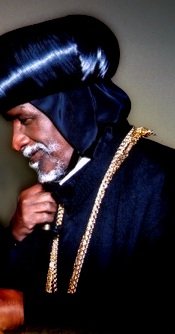 WASHINGTON, D.C. – January 20, 2017 marks the 11-year anniversary of the Eritrean government’s illegal removal of Abune Antonios as the rightful Patriarch of the Eritrean Orthodox Church, the nation’s largest religious community. The Patriarch has been detained since 2007: His “crime” was his refusal to excommunicate 3,000 parishioners who opposed the government.
“The U.S. Commission on International Religious Freedom (USCIRF) calls on the Eritrean government to release Abune Antonios, allow him to return to his position as Patriarch, and cease its interference in the Eritrean Orthodox Church,” said USCIRF Chair Rev. Thomas J. Reese, S.J. “The government’s persecution of Patriarch Antonios is only one example of the country’s grave religious freedom violations. Eritrea has been called the North Korea of Africa due to its vigorous assault on the rights of its people: Thousands are imprisoned for their religious beliefs and their real or imagined opposition to the government.”
One year after removing the Patriarch, Eritrean authorities confiscated his personal pontifical insignia. On May 27, 2007, the Eritrean government forcibly removed Patriarch Antonios from his home and placed him under house arrest at an undisclosed location. He remains detained and is denied medical care despite severe heath concerns.
Chair Reese has taken up the case of Patriarch Antonios as part of USCIRF’s Religious Prisoners of Conscience Project.
The Eritrean government engages in systematic and egregious violations of religious freedom, including torture or other ill treatment of religious prisoners, arbitrary arrests and detentions without charges, a prolonged ban on public religious activities of unregistered religious groups, and interference in the internal affairs of registered religious groups.
President Isaias Afwerki and the Popular Front for Democracy and Justice (PFDJ) have ruled Eritrea with absolute authority since the country’s 1993 independence from Ethiopia. Private newspapers, political opposition parties, and independent nongovernmental organizations are not allowed in Eritrea. The government requires all physically and mentally capable people between the ages of 18 and 70 to perform national service full-time and indefinitely.
In 2016, the United Nations Commission of Inquiry on Human Rights in Eritrea concluded that Eritrean authorities had committed crimes against humanity.
Since 2004, USCIRF has recommended, and the State Department has designated, Eritrea a “country of particular concern,” or CPC, for its systematic, ongoing, and egregious violations of religious freedom. For more information, please see USCIRF’s chapter on Eritrea in the 2016 Annual Report.
USCIRF’s Religious Prisoners of Conscience Project highlights the plight of individuals who have been imprisoned for their religious beliefs, practices or identity. To learn more about this project or to interview a Commissioner, please contact USCIRF at [email protected] or 202-523-3258.
Jan 5, 2017
FOR IMMEDIATE RELEASE
January 5, 2017
WASHINGTON, D.C. – The U.S. Commission on International Religious Freedom (USCIRF) today marks the two-year anniversary of the brutal terrorist attacks in Paris on the offices of the Charlie Hebdo magazine and the Hyper Cacher kosher supermarket. During these attacks, 17 people were murdered in what was also an assault on the freedom of religion or belief. The terrorists targeted the staff of Charlie Hebdo, deeming them blasphemers, and the shoppers at the Hyper Cacher market because they were Jewish.
Since that time, Europe has had to contend with ISIL-inspired terror attacks, a spike in reports of incidents of intolerance against Muslims—both Europeans and foreign refugees and migrants—and the continued persistence of virulent anti-Semitism.
“In the face of these challenges, educational and other measures are desperately needed to strengthen democracy, counter anti-Muslim bias and anti-Semitism, and support the freedom of religion or belief of each and every peaceful practitioner of this precious freedom. People must not be excluded from their neighborhoods, cultures, or societies because of who they are and what they believe,” said USCIRF Chair Rev. Thomas J. Reese, S.J. “We also must take every opportunity to train religious leaders, educators, and community members to support diverse views and advocate against hate. We have no time to lose.”
To interview a USCIRF Commissioner, please contact USCIRF at [email protected] or 202-786-0615.
Dec 23, 2016
FOR IMMEDIATE RELEASE
December 23, 2016
WASHINGTON, D.C. – The UN General Assembly on December 19 passed its 14th consecutive resolution which included a condemnation of the Iranian government’s actions against the Baha’i community, underscoring the persecution and discrimination members of this peaceful religious community have faced for decades.
The closure last month of at least 124 Baha’i-owned shops and businesses joins a long list of repressive actions the Iranian government has taken against members of this minority religious community. The government has permitted Baha’is to be killed with impunity; demolished cemeteries; vilified Baha’is through government-controlled media outlets; prohibited Baha’is from working in the public sector and establishing places of worship, schools (including the Baha’i’ Institute of Higher Education), or any independent religious associations; banned post-secondary education for Baha’i students; and imprisoned Baha’i educators and community leaders solely for their religious beliefs, including the Baha’i Seven, who have been jailed since 2008: Fariba Kamalabadi, Jamaloddin Khanjani, Afif Naeimi, Saeid Rezaie, Mahvash Sabet, Behrouz Tavakkoli, and Vahid Tizfahm.
“The Iranian government should release immediately the Baha’i Seven and other prisoners of conscience. These brave, peaceful, and innocent men and women should be praised as model citizens rather than languishing in prison because of who they are,” said USCIRF Chair Father Thomas J. Reese, S.J.
“Their plight is our plight. As a religious freedom advocate, I am taking up the cases of Fariba Kamalabadi and Mahvash Sabet as part of USCIRF’s Religious Prisoners of Conscience Project. The Iranian government must end its vicious campaign to eradicate the Baha’i community and treat them and other religious minorities with dignity and respect, as is their right under Iranian and international law,” said USCIRF Commissioner Kristina Arriaga.
President Rouhani, who has entered the final year of his four-year term, has not fulfilled his campaign promise to strengthen civil liberties for religious minorities. In fact, since assuming power in 2013, the number of religious minority community members who are in prison because of their beliefs has increased, including at least 85 Baha’is. Since 1979, authorities have killed more than 200 Baha’i leaders and dismissed more than 10,000 from government and university jobs. USCIRF has recommended since 1999 that Iran be named a “country of particular concern” under the U.S. International Religious Freedom Act for its “systematic, ongoing and egregious” violations of religious freedom, and that the U.S. government continue to identify Iranian government agencies and officials responsible for severe violations of religious freedom, freeze their assets, and bar their entry into the United States. For more information on religious freedom conditions in Iran and for recommendations for U.S. policy, please see the Iran chapter in USCIRF’s 2016 Annual Report (in English and Persian).
USCIRF’s Religious Prisoners of Conscience Project highlights the plight of individuals who have been imprisoned for their religious beliefs. To hear more about this project or interview a Commissioner, please contact USCIRF at [email protected] or 202-523-3258.