Jan 27, 2017
The following op-ed appeared in Deseret News on January 27, 2017
By former USCIRF Commissioners Clifford D. May and Tenzin Dorjee
As the world commemorates International Holocaust Remembrance Day, marking the liberation of the Auschwitz death camp 71 years ago, European Jews no longer face a single, continent-wide regime seeking their destruction.
Nonetheless, today, 71 years after liberation from Hitler, they face a rising anti-Semitism across European societies. From denying the Holocaust to threatening another Shoah, from painting Nazi swastikas and scrawling death threats on synagogues and graves, to taunting, accosting and assaulting Jews in religious garb, Jew haters are revealing themselves through word and deed.
This rise has diverse sources, including jihadists, neo-Nazis and members of political organizations. All of them share a propensity to use bigoted words, imagery and stereotypes drawn from Europe’s ancient legacy of hatred of Jews.
The problem is clear. The question is what governments, officials and others are doing about it.
Unfortunately, in Eastern Europe, some governments and political parties are doing worse than nothing. While some are denying or downplaying the rise in anti-Semitism, others are fueling it by displaying pro-Nazi sympathies and tolerating Holocaust revisionism among their members and supporters.
Fortunately, in Western Europe, governments and officials largely admit that anti-Semitism is real and is growing.
They acknowledge that since the turn of the century, anti-Jewish graffiti increasingly has appeared in Paris, Berlin, Madrid, Amsterdam, Stockholm, Malmo, London, Rome and other cities. They admit that there have been repeated threats and acts of violence. They agree that since World War II, Jewish citizens have never been more afraid to wear or display religious articles — from skullcaps (yarmulkes) on their heads to mezuzahs on their doorposts — revealing themselves to be Jews.
But in practice, the governments or political parties of some of these same leaders still fall short in at least two ways.
First, in an ironic twist, rather than allaying the fears of some Jews to don religious garb or engage in familiar religious practices, some are adding to these fears by supporting legal bans or restrictions. France and Belgium bar some students and government workers from wearing “conspicuous” religious symbols, including yarmulkes. At least four countries — Iceland, Norway, Sweden, and Switzerland — ban kosher slaughter. In Norway and Germany, efforts have been advanced to ban infant male circumcision.
These restrictions and bans also affect members of other religious groups. For instance, Christians confront limitations on wearing crosses, and Muslims face restrictions on donning head scarves and bans on halal slaughter. Behind these infringements on religious freedom is an ideological impetus to sweep the public square clean of religious expression or practice, confining such expressions and practices to homes and places of worship.
Second, when haters attack Jews, criminal justice systems in Europe often fail to deem the perpetrators anti-Semitic.
Earlier this month, a court in Wuppertal, Germany, upheld a lower court’s ruling in the 2015 sentencing of three Germans of Palestinian descent to probation for setting fire to a synagogue in July 2014, the same synagogue the Nazis had burned in 1938 during the Kristallnacht pogroms. The court concurred that since they were incensed about Israel’s actions in the Middle East, their act of arson did not constitute anti-Semitism.
Similarly, in a speech titled, “Combating Global Anti-Semitism in 2016,” Ira Forman, the U.S. special envoy to monitor and combat anti-Semitism, noted that, according to Jewish leaders in Sweden, police in Stockholm classified recent graffiti with swastikas as “actions against Israel,” not anti-Semitism. He quoted a leader as saying, “If you are hurt wearing a kippa [yarmulke], it is classified as anti-Zionism. …”
In these instances, criminal justice systems were confronting two phenomena — anti-Zionism and anti-Semitism. While rightly affirming one can oppose Israeli policies without automatically being anti-Semitic, they wrongly denied the obvious:
Deliberately targeting Jewish property, or demonizing or attacking people simply for being Jewish inescapably is anti-Semitic. These actions should neither be excused nor minimized, rationalized nor redefined, but called out and condemned.
It is time for nations to deal forthrightly with the problem. Holocaust denial must be confronted and refuted. Religious freedom must be honored by protecting Jews from violence and removing restrictions on peaceful religious practices. Jews should be free to live as Jews and as citizens of their respective countries, and to speak, write, assemble and associate without fear or intimidation.
And as Europeans confront anti-Semitism, so must people everywhere reject hatred and embrace dignity and humanity. There is no greater lesson from the Holocaust. While the attempt to eradicate the entire Jewish people was horrifyingly unique in planning, effort and intent, the mindset of hatred extended to others. From the Roma to the mentally and physically disabled, it degraded, dehumanized and destroyed the lives of millions more.
And so, as we mark International Holocaust Remembrance Day, and its U.N. theme this year, “Educating for a Better Future,” let us stand against all forms of hatred and bigotry.
Jan 23, 2017
The following op-ed appeared in Philadelphia Inquirer on January 23, 2017
By former USCIRF Commissioners Thomas J. Reese and Daniel Mark
As our nation commemorated National Religious Freedom Day on Jan. 16, marking Virginia's adoption in 1786 of Thomas Jefferson's Statute for Religious Freedom, we recalled the billions of people who live in countries where this fundamental right is violated. From onerous religious registration requirements to imprisonment, torture, and mass murder, religious freedom abuses betray the universal values that most nations endorsed in documents such as Article 18 of the 1948 Universal Declaration of Human Rights.
A single, undeniable fact spotlights these dismal conditions:
Nearly every government and entity - from China to ISIS - that poses a major foreign policy challenge to the United States also commits monumental religious freedom abuses.
How should the Trump administration respond? We urge a firm and resolute stand for this liberty.
The abuses of such governments and entities are long-standing and notorious.
For example, China and North Korea are secular tyrannies that consider religious beliefs potential competitors of Communist state ideology.
Chinese officials have torn down churches and crosses, repressed Tibetan Buddhists, cracked down on Uighur Muslims, tortured and sought to "re-educate" the Falun Gong, and jailed and harvested organs from prisoners.
Religious freedom is nonexistent in North Korea. Individuals secretly engaging in religious activity are subject to arrest, torture, imprisonment, and execution. The government often inflicts added punishment by sentencing their entire families to decades in brutal slave labor camps.
In Russia, the Kremlin favors Russia's majority religious organization, the Russian Orthodox Church's Moscow Patriarchate, as a bulwark of state power, while discriminating against religious minority communities. Peaceful religious practitioners often are jailed or fined after being charged with crimes of extremism or terrorism.
Iran is a religious tyranny run by leaders who elevate their own interpretations of Sh'ia Islam above all other beliefs, religious or secular. Authorities have detained, tortured, and even executed Iranians, from Shi'a, Sunni, and Sufi Muslim dissenters to Baha'is and Christians.
Pakistan's government strictly enforces its blasphemy law, with more prisoners sentenced to death or life imprisonment based on blasphemy convictions than anywhere in the world. Pakistan's religious minorities suffer in at least four distinct ways. They bear the brunt of government enforcement of such religiously repressive laws; extremists assault them as perceived transgressors of such statutes; the government fails to protect them against such attacks; and it frequently fails to bring perpetrators to justice, even when the accusations are false.
Syria is another obvious challenge. A civil war triggered by the Assad regime's failure to respect human rights devolved into a sectarian conflict which helped fuel the rise of ISIS and a massive refugee crisis.
ISIS's depredations as a nonstate actor are notorious, including committing genocide through summary executions, rape, sexual enslavement, abduction of children, destruction of houses of worship, and forced conversions of Yazidis, Christians, Shi'a Muslims, and other religious minorities.
Every one of these nations and entities, representing the most critical foreign policy challenges the Trump administration will likely face, is a religious freedom abuser.
What should the new administration do?
Follow the lead of the past three administrations and designate China, North Korea, and Iran as "countries of particular concern (CPC) under the International Religious Freedom Act, marking them as among the world's worst religious freedom violators and subject to sanctions.
Take the lead and designate Pakistan and Syria as CPCs as well.
Designate ISIS as an "entity of particular concern," a new category from Congress which holds violent religious extremist groups, including terrorist organizations, as responsible as recognized governments for religious persecution.
Swiftly nominate a well-qualified ambassador-at-large for international religious freedom, and make religious freedom for everyone, everywhere, a top priority.
As we remember National Religious Freedom Day and celebrate our own liberty, let us also stand for this pivotal right for others.
Jan 18, 2017
FOR IMMEDIATE RELEASE
January 18, 2017
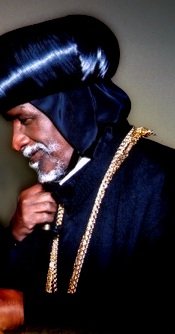 WASHINGTON, D.C. – January 20, 2017 marks the 11-year anniversary of the Eritrean government’s illegal removal of Abune Antonios as the rightful Patriarch of the Eritrean Orthodox Church, the nation’s largest religious community. The Patriarch has been detained since 2007: His “crime” was his refusal to excommunicate 3,000 parishioners who opposed the government.
“The U.S. Commission on International Religious Freedom (USCIRF) calls on the Eritrean government to release Abune Antonios, allow him to return to his position as Patriarch, and cease its interference in the Eritrean Orthodox Church,” said USCIRF Chair Rev. Thomas J. Reese, S.J. “The government’s persecution of Patriarch Antonios is only one example of the country’s grave religious freedom violations. Eritrea has been called the North Korea of Africa due to its vigorous assault on the rights of its people: Thousands are imprisoned for their religious beliefs and their real or imagined opposition to the government.”
One year after removing the Patriarch, Eritrean authorities confiscated his personal pontifical insignia. On May 27, 2007, the Eritrean government forcibly removed Patriarch Antonios from his home and placed him under house arrest at an undisclosed location. He remains detained and is denied medical care despite severe heath concerns.
Chair Reese has taken up the case of Patriarch Antonios as part of USCIRF’s Religious Prisoners of Conscience Project.
The Eritrean government engages in systematic and egregious violations of religious freedom, including torture or other ill treatment of religious prisoners, arbitrary arrests and detentions without charges, a prolonged ban on public religious activities of unregistered religious groups, and interference in the internal affairs of registered religious groups.
President Isaias Afwerki and the Popular Front for Democracy and Justice (PFDJ) have ruled Eritrea with absolute authority since the country’s 1993 independence from Ethiopia. Private newspapers, political opposition parties, and independent nongovernmental organizations are not allowed in Eritrea. The government requires all physically and mentally capable people between the ages of 18 and 70 to perform national service full-time and indefinitely.
In 2016, the United Nations Commission of Inquiry on Human Rights in Eritrea concluded that Eritrean authorities had committed crimes against humanity.
Since 2004, USCIRF has recommended, and the State Department has designated, Eritrea a “country of particular concern,” or CPC, for its systematic, ongoing, and egregious violations of religious freedom. For more information, please see USCIRF’s chapter on Eritrea in the 2016 Annual Report.
USCIRF’s Religious Prisoners of Conscience Project highlights the plight of individuals who have been imprisoned for their religious beliefs, practices or identity. To learn more about this project or to interview a Commissioner, please contact USCIRF at [email protected] or 202-523-3258.