Dec 15, 2016
FOR IMMEDIATE RELEASE
December 15, 2016
WASHINGTON, D.C. – The U.S. Commission on International Religious Freedom (USCIRF) strongly condemns the brutal attack at Cairo’s main Coptic Orthodox Cathedral. Twenty-four worshippers were killed and 49 wounded: many of those murdered were women and children. USCIRF sends condolences to the family and friends of the victims and wishes those wounded a speedy recovery.
“USCIRF calls on the Egyptian government to bring to justice the perpetrators of this heinous act, and immediately provide increased protection to members of the Coptic community, especially given the upcoming Coptic Christmas holiday,” said USCIRF Chair Rev. Thomas J. Reese, S.J. “The Egyptian government must respond to this attack against the Coptic community, the deadliest in recent memory, differently than it has in the past, where, in too many instances, there has been inadequate accountability fostering a climate of impunity. At the same time, we caution the government not to allow this attack to be used to justify further restrictions on civil society.”
Most perpetrators from past large scale incidents that targeted Copts and took place between 2011 and 2013, and even before that, have not been prosecuted. In addition, repressive laws and discriminatory policies against Copts remain in place.
The continued existence of these laws and policies and the climate of impunity resulting from the lack of accountability are taking place against a backdrop of deteriorating human rights conditions. These factors mitigate the positive steps the Egyptian government has taken in recent years to address some religious freedom concerns.
For more information on Egypt, please see USCIRF’s 2016 Annual Report chapter (in English and in Arabic).
To interview a Commisisoner, please contact USCIRF at [email protected] or 202-786-0615.
Dec 13, 2016
FOR IMMEDIATE RELEASE
December 13, 2016
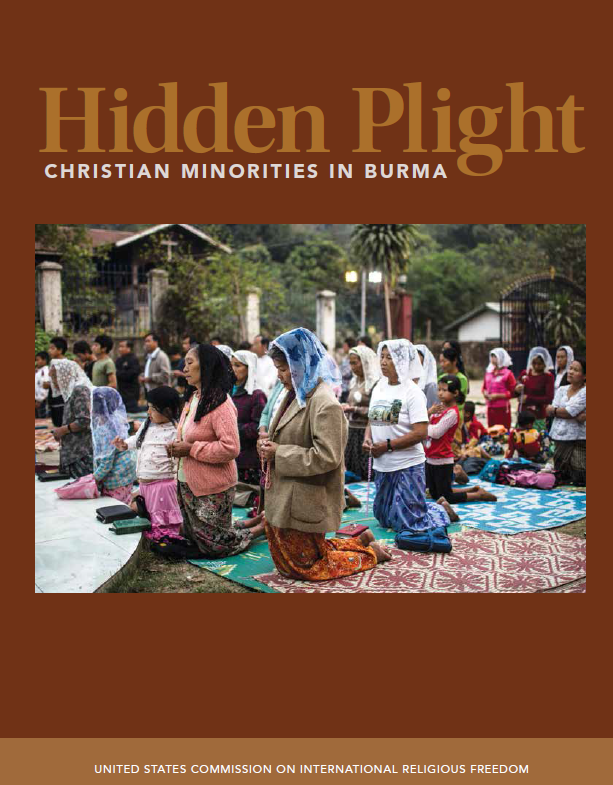
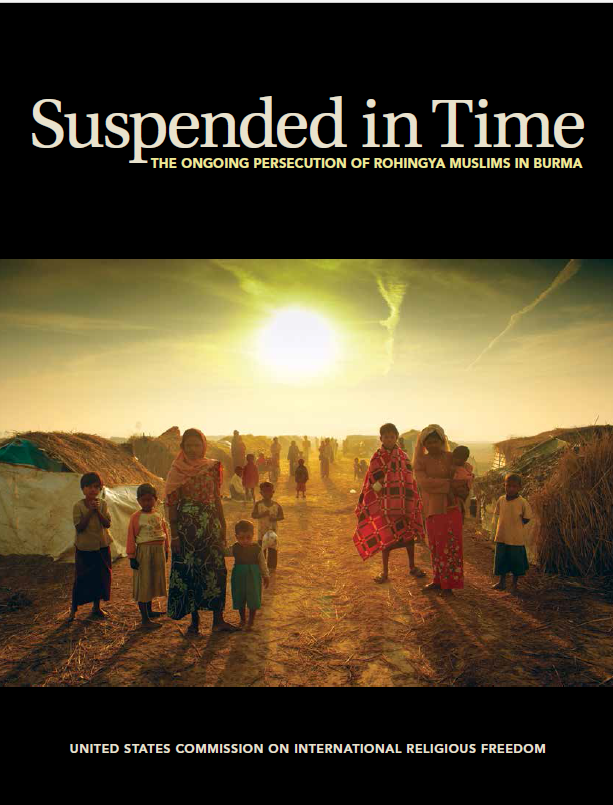
WASHINGTON, D.C. – The U.S. Commission on International Religious Freedom (USCIRF) today released two reports highlighting Burma’s serious religious freedom challenges.
- Hidden Plight: Christian Minorities in Burma highlights the pervasive and longstanding persecution and discrimination Christians face that have persisted, often unreported, for generations. View the report here in English and Burmese.
- Suspended in Time: The Ongoing Persecution of Rohingya Muslims in Burma details the persecution of Rohingya Muslims’ resulting from government-directed abuses and/or government indifference to discrimination and violence that has killed hundreds, displaced thousands, and destroyed hundreds of religious properties since 2012. View the report here in English and Burmese.
From Hidden Plight: Christian Minorities in Burma
The enduring, constitutionally entrenched power of the military and the elevation of Buddhism as the de facto state religion are key factors in understanding violations of religious freedom currently affecting Christian communities in Burma…Many of the discriminatory policies and practices instituted under the military regime continue today… The Committee for the Protection of Race and Religion, better known as Ma Ba Tha, and other ultra-nationalistic monks have played a key role in abusing the right to religious freedom and inciting violence against Christian pastors and missionaries.
From Suspended in Time: The Ongoing Persecution of Rohingya Muslims in Burma:
More than four years ago, two waves of sectarian violence struck Rakhine State. In the time since, Rohingya Muslims, Rakhine Buddhists, and individuals of other ethnicities and beliefs throughout the state have suffered grievous deprivations of basic rights, including inadequate access to food, water, shelter, education, and health care; restrictions on freedom of movement; denial of needed humanitarian aid; limited opportunities to obtain an education or earn a living; egregious human rights abuses resulting in death, injury, and displacement; and, in the case of Rohingya Muslims, the denial of the right to a nationality and citizenship.
EVENT: USCIRF will present findings from the reports at an event today at 3pm EST at the National Press Club in Washington, DC. For more information on the event, please click here.
To interview a Commisisoner, please contact Travis Horne at [email protected] or 202-786-0615.
Dec 9, 2016
The following op-ed appeared in Religion New Service on December 9, 2016
By former USCIRF Commissioners Kristina Arriaga and John Ruskay
Pwint Phyu Latt is a Muslim peace activist in Burma who sought to promote interfaith relations with Buddhists, the nation’s religious majority. She was sentenced this year to two years in prison and two more years of hard labor.
Gulmira Imin is a Uighur Muslim in China who led the 2009 Uighur protests against its communist government. She has been in prison ever since.
Maryam Naghash Zargaran is a Christian in Iran who converted from Islam and worked with pastor Saeed Abedini prior to his incarceration and release. She was released briefly and returned to prison this year after serving three years of a four-year sentence.
Mahvash Sabet, a school principal, and Fariba Kamalabadi, a developmental psychologist, are Baha’is in Iran. Arrested in 2008, they and five other leaders known as the Baha’i Seven were given 20-year sentences based on false charges such as espionage.
Mehrinisso Hamdamova was a teacher of Islam to women in Uzbekistan. She was sentenced in 2010 to a seven-year prison term in a labor camp for the “crime” of private teaching about religion and reportedly suffers from cancer.
As members of the U.S. Commission on International Religious Freedom, we stand in solidarity with these and other religious prisoners of conscience.
We reaffirm our stand Saturday (Dec. 10) — Human Rights Day — as we commemorate the U.N. General Assembly’s adoption of the Universal Declaration of Human Rights.
We stand for the inalienable human right, affirmed in Article 18 of the declaration, of these prisoners, and indeed all people, to freedom of conscience and religion. And we invite others in the human rights community to stand with us, join with us and call for their release.
In highlighting these six prisoners today, our aim is twofold. We want to spotlight their plight and their countries’ appalling religious freedom abuses. And by focusing on these women, we seek to provide real-life examples of how in many parts of the world, the lack of religious freedom disempowers women.
Clearly, all of their countries are serious religious freedom violators.
In Burma, Buddhist state and nonstate actors target ethnic and religious minorities, from Rohingya and other Muslims to Christians.
China’s regime has cracked down on Uighur Muslims observing Ramadan, torn down churches and crosses, targeted the Falun Gong, repressed Tibetan Buddhists and jailed, tortured and harvested organs from prisoners.
Iran’s government has detained, tortured and even executed opponents of its interpretation of Shiite Islam and has targeted religious minorities, from Baha’is to Christians to Sunni Muslims.
And Uzbekistan severely restricts all independent religious activity and imprisons many thousands of individuals it claims to be religious extremists.
USCIRF has recommended and the U.S. State Department has designated all of these nations as “countries of particular concern,” marking them as among the world’s worst religious freedom violators.
It is no secret that these nations reserve their worst abuses not just for the religious groups they harass, but for individuals who either lead these groups or who boldly and publicly live out their teachings as their conscience dictates.
Pwint Phyu Latt, Gulmira Imin, Maryam Naghash Zargaran, Mahvash Sabet, Fariba Kamalabadi and Mehrinisso Hamdamova are such individuals.
These women were acting on their convictions and pursuing their aspirations as human beings. Once authorities intervened, denying them their full exercise of freedom of conscience and religion, that process was abruptly halted.
Human rights supporters, particularly advocates for the rights of women, can advance their cause when they join with supporters of religious liberty. Indeed, religious freedom, rightly understood, affirms women precisely by affirming their right to choose what to believe and how to live. To protect religious freedom is allow women to pursue a path toward fulfilling their deepest potential.
As we mark Human Rights Day, we call on supporters of freedom of religion or belief and advocates for the empowerment of women to recognize the ties that bind us. Let us call for the release of these six female prisoners of conscience and others, and for governments to honor religious freedom and the full panoply of related human rights for the benefit of their people.