May 14, 2013
FOR YOUR INFORMATION
May 14, 2013 | By Katrina Lantos Swett
The following was published in the Washington Post, On Faith on May 14, 2013.
Fifteen years ago, on May 14, 1998, U.S. House of Representatives voted in favor of a landmark effort to promote a pivotal human right abroad. In October of that year, the Senate also acted and President Clinton signed the International Religious Freedom Act, or IRFA, into law. Among other provisions, IRFA created the Office of International Religious Freedom in the State Department and the independent, bipartisan Commission on International Religious Freedom (USCIRF), of which I am chair.
As part of our mandate, USCIRF issues an annual report on the global state of religious freedom. On April 30, we issued our 2013 report.
How is this freedom faring today? As our report confirms, it is imperiled daily. Violations range from restrictions on building houses of worship to more severe abuses, including arbitrary detention, torture, and even murder.
For humanitarian reasons alone, we should care. But in our ever-uncertain post-9/11 world, we have further cause for concern.
As our report shows, one of today"s most powerful drivers of these outrages are the forces of violent religious extremism. These forces hijack religion and undermine countries of critical importance to the United States. Extremists destroy others" freedom, fueling destabilization and despair.
Unfortunately, the governments of some countries promote or embody these forces. By their action or inaction, other governments respond to extremist threats in deeply flawed and counterproductive ways. Some insist on enforcing religiously radical and abusive measures of their own, while others permit such abuses to occur with impunity. Still other governments seek to combat extremism with repressive measures that risk producing more of the very problem they seek to diminish. This dangerous and self-defeating dynamic threatens others" religious freedom and America"s own security.
The cover of the 2013 USCIRF Annual Report, which shows a Burmese mosque burn to the ground, highlights how this threat of violent extremism touches numerous countries and cultures.
Iran is a blatant example of a violent theocracy which persecutes those contradicting its own interpretation of Shi"i Islam - from Baha"i, Christian, and Sunni Muslim minorities to dissenters within its Shi"i majority.
Pakistan and Egypt are countries whose governments enforce religious measures that unintentionally spur extremists to assault perceived transgressors. In Pakistan, blasphemy-like laws fuel the violence of terrorist groups against Christians and Ahmadis, and sectarian hatred motivates unprecedented attacks against Shi"i Muslims. In Egypt, prosecution of Coptic Christians and dissenting Muslims for "contempt” of religion can and does encourage violence against them. Unfortunately, problematic provisions in Egypt"s new constitution support these laws.
Nigeria"s government provides an example of how toleration of extremism ensures further abuses. Nigeria has failed to protect its people from Boko Haram, an Islamist terrorist group, or to prosecute both Muslims and Christians guilty of religiously-related violence that has killed more than 14,000 citizens over the past decade.
Finally, China and Russia are nations whose leaders use the threat of extremism to repress entire religious communities, risking the creation of a self-fulfilling prophecy. Witness China"s relentless persecution of Uighur Muslims and especially Russia"s oppression of Chechens and other Muslims.
Why should Americans care about others" freedom? While religious freedom is our first freedom, enshrined in our First Amendment and conceived as a right to which everyone is entitled, it also is recognized by international law and treaty, including the Universal Declaration of Human Rights. Moreover, religious freedom is connected unmistakably to a country"s well-being. Research finds that it is associated with vibrant political democracy, rising economic and social progress, diminished violence, and greater stability. Nations that disrespect this freedom are incubators for poverty and instability, war and terror, and violent radical movements and activities.
This last point is crucial. As the 9/11 attacks and subsequent atrocities tragically have shown, we cannot count on the containment of violent religious extremism within countries or regions.
The best way for nations to counter the extremism of some is not through the repression of all, nor by appeasement or neglect of the extremists, but by freedom. The United States should champion a free and vibrant marketplace of ideas, including religious ideas, and support the rule of law which makes freedom possible. Our report highlights many avenues to promote this indispensable liberty.
Freedom is where our values and interests, our idealism and realism, meet. As Americans, we can and should honor both by supporting religious freedom for all.
Katrina Lantos Swett serves as Chair of the U.S. Commission on International Religious Freedom (USCIRF).
To interview a USCIRF Commissioner please contact USCRIFat (202) 523-3258 or [email protected]
Apr 30, 2013
FOR IMMEDIATE RELEASE
April 30, 2013| By USCIRF
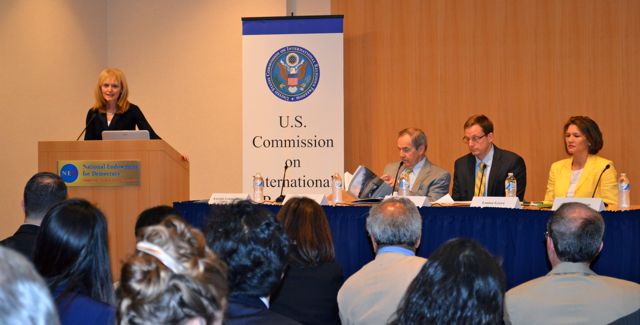
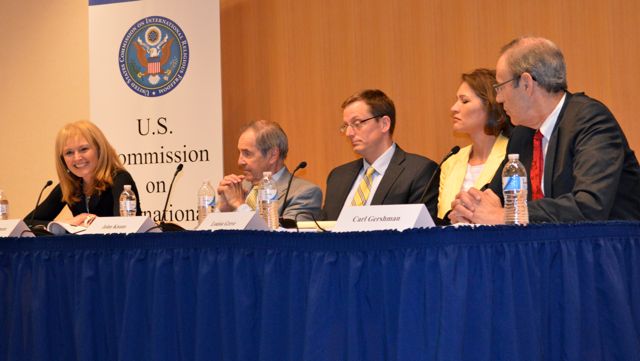
Washington, D.C. -- The U.S. Commission on International Religious Freedom (USCIRF), an independent federal advisory body created by the International Religious Freedom Act (IRFA) to monitor religious freedom abuses abroad, today released its 2013 Annual Report. The Report highlights the status of religious freedom globally and identifies those governments that are the most egregious violators.
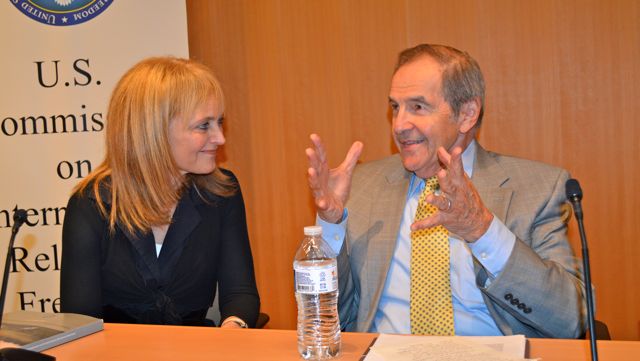
"The state of international religious freedom is increasingly dire due to the presence of forces that fuel instability. These forces include the rise of violent religious extremism coupled with the actions and inactions of governments. Extremists target religious minorities and dissenters from majority religious communities for violence, including physical assaults and even murder. Authoritarian governments also repress religious freedom through intricate webs of discriminatory rules, arbitrary requirements and draconian edicts,” said Dr. Katrina Lantos Swett, USCIRF's Chair.
The 2013 Annual Report recommends that the Secretary of State re-designate the following eight nations as "countries of particular concern” or CPCs: Burma, China, Eritrea, Iran, North Korea, Saudi Arabia, Sudan, and Uzbekistan. USCIRF finds that seven other countries meet the CPC threshold and should be so designated: Egypt, Iraq, Nigeria, Pakistan Tajikistan, Turkmenistan, and Vietnam.
"The Annual Report ultimately is about people and how their governments treat them. Violations affect members of diverse religious communities around the world, be they Rohinghya Muslims in Burma, Coptic Christians in Egypt, Buddhists, Uighur Muslims and Falun Gong in China, Baha'is in Iran, Ahmadis and Christians in Pakistan, or Muslims in Islamic countries such as Saudi Arabia and Uzbekistan and in non-Muslim nations like Russia. We recommend that the White House adopt a whole-of-government strategy to guide U.S. religious freedom promotion and that Secretary of State Kerry promptly designate CPCs, before currently designated actions expire later this year,” said Lantos Swett.
In Burma, ongoing political reforms have yet to significantly improve the situation for freedom of religion and belief. Sectarian violence and severe abuses of religious freedom and human dignity targeting ethnic minority Christians and Muslims continue to occur with impunity.
In Egypt, despite some progress during a turbulent political transition, the government has failed or been slow to protect from violence religious minorities, particularly Coptic Christians. The government continues to prosecute, convict, and imprison individuals for "contempt” or "defamation” of religion, and the new constitution includes several problematic provisions relevant to religious freedom.
In both Pakistan and Nigeria, religious extremism and impunity have factored into unprecedented levels of violence that threaten the long-term viability of both nations. Targeted violence against Shi'i Muslims in Pakistan is pervasive, while repeated Boko Haram attacks in Nigeria exacerbate sectarian tensions.
"Many of these countries top the U.S. foreign policy agenda, and religion is a core component in their makeup. Successful U.S. foreign policy recognizes the critical role religious freedom plays in each of these nations and prioritizes accordingly. Religious freedom is both a pivotal human right under international law and a key factor that helps determine whether a nation experiences stability or chaos,” said Lantos Swett.
USCIRF also announced the placement of eight nations on its Tier 2 List for 2013. The Tier 2 category replaces the Watch List designation USCIRF previously used. These nations are: Afghanistan, Azerbaijan, Cuba, India, Indonesia, Kazakhstan, Laos and Russia. USCIRF found the violations these governments engage in or tolerate are particularly severe, and meet at least one criterion, but not all, of IRFA's three-fold "systematic, ongoing, egregious” CPC standard.
In Russia, religious freedom conditions suffered major setbacks in the context of growing human rights abuses. In Indonesia, the country's rich tradition of religious tolerance and pluralism is seriously threatened by arrests of individuals the government considers religiously deviant and violence perpetrated by extremist groups. Federal and provincial officials, police, courts, and religious leaders often tolerate and abet the conduct of religious freedom abusers.
The USCIRF report also highlights the status of religious freedom in countries/regions that do not meet the Tier 1 (CPC) or Tier 2 threshold. These include: Bahrain, Bangladesh, Belarus, Ethiopia, Turkey, Venezuela and Western Europe. The Annual Report also addresses in-depth thematic issues: Constitutional Changes; Severe Religious Freedom Violations by Non-State Actors; Laws against Blasphemy and Defamation of Religions; Imprisonment of Conscientious Objectors; Legal Retreat from Religious Freedom in Post-Communist Countries; Kidnapping and Forced Religious De-Conversion in Japan; and Religious Freedom Issues in International Organizations.
ABOUT USCIRF
USCIRF is an independent, bipartisan U.S. federal government advisory body with its commissioners appointed by the President and the leadership of both political parties in Congress. The 1998 International Religious Freedom Act (IRFA) requires that the United States annually designate as CPCs countries whose governments have engaged in or tolerated systematic, ongoing and egregious violations of the universal right to freedom of religion or belief. IRFA also tasks USCIRF with assessing conditions in these and other countries and making recommendations to the President, Secretary of State, and Congress.
In accordance with IRFA, USCIRF uses international standards, as found in UN conventions and declarations, for assessing religious freedom conditions.
To interview a USCIRF Commissioner please contact USCRIF at (202) 523-3258 or [email protected]