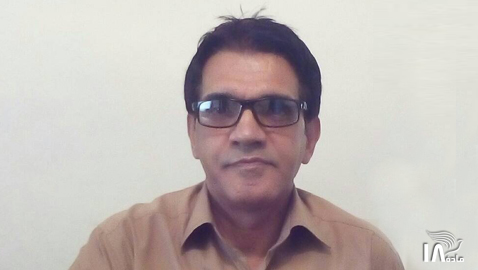
Additional Name(s): Naser Navard Gol-Tapeh, Navard Gol-Tapeh, ناصر نورد گلتپه, Nasser Navard Gol-Tapeh
Gender: Male
Current Location: Evin Prison, Tehran
Perpetrator: Iran
Religion or Belief: Christian – Protestant
Health Concerns: Suffered from stroke while in detention
Reports of Torture: No
Reports of Medical Neglect: Yes
Date of Detainment: July//2016
Current Status: Not Released
Religious Leader: No
Most Recent Type of Abuse: Detainment
Reason for Persecution: Practicing Religion as a Convert Religious Activity Religious Belief Religious Identity
Nature of Charges: Banned Organization
Naser Navard Goltapeh
Extra Bio Info:
Naser Navard Goltapeh is detained for his religious identity.
In February 2025, authorities detained Goltapeh and other Christians without charge and sent him to Evin Prison.
In May 2025, Goltapeh was hospitalized after suffering a stroke from a 35-day hunger strike protesting his detention in solitary confinement. After two days in Bani-Hashem Hospital, he was returned to the general ward of Evin Prison.
In September 2025, Judge Abolghasem Salavati of Branch 15 of the Tehran Revolutionary Court held a hearing for Goltapeh on the charges of "propaganda against the regime" and "acting against national security." In the prosecutor’s final decision, activities such as establishing, operating, and leading a house church, holding evangelical Christian gatherings, and performing religious rites such as water baptism and communion were cited as examples of the alleged offenses.
On October 15, 2025, Judge Abolqasem Salavati sentenced Goltapeh to 10 years' imprisonment on various charges under the amended Article 500 of the Iranian penal code. The Ministry of Intelligence has confiscated his personal property, including Bibles and Christian literature.
_____________________________________________________________________________________________________________________
Naser Navard Goltapeh has been previously imprisoned for practicing his religion as a convert.
In June/July 2016, authorities arrested Goltapeh following a raid on an engagement party he was attending. He was reportedly denied access to a lawyer.
In November 2016, Goltapeh was reportedly released on bail.
In the summer of 2017, Goltapeh was sentenced to ten years in prison for "founding or leading an organization that aims to disrupt national security" (Art. 498 IPC), which reportedly included the crimes of "acting against national security, soft overthrow of the state through Christian proselytization, institutional relations with the church of The Living Word...and zionist propaganda."
In November 2017, it is reported that an appeals court had upheld Goltapeh's sentence.
In January 2018, it was reported that Goltapeh had been taken into state custody to begin serving his sentence.
In August 2020, it was reported that Goltapeh had developed COVID-19 symptoms.
In February 2022, it was reported that Goltapeh was experiencing COVID-19 symptoms following an outbreak in his prison.
In October 2022, it was reported that Goltapeh had been released from prison.
Goltapeh was reportedly routinely denied adequate medical care.
Goltapeh was reportedly denied retrials and parole, despite qualifying for it.
Goltapeh was the primary caretaker of his mother prior to his initial arrest.
Related cases: Joseph Shahbazian
Publicly Available Information:
- "Prisoners including Christians transferred after strike on Evin" Article 18
- "Christian convert suffers stroke after 35-day hunger strike" Article 18
- Christians once 'pardoned' after years in prison rearrested Article 18
- Photo attributed to Article 18
- USCIRF Annual Report 2023: Iran
- Article18, Tweet, October 17, 2022
- USCIRF Country Update: Religious Freedom in Iran in 2022 July 2022
- "Four Christians unwell after suspected Covid-19 outbreak in Evin Prison" Article 18
- "Naser Navard Goltapeh" United For Iran
- "Naser Gol-Tapeh" Church In Chains
- "Mother Begs for Jailed Christian's Release Amid Crackdown on Converts in Iran" Iran Wire
- "Nasser Navard Gol-Tapeh: ‘I am in prison because of my faith in Jesus Christ’" Article 18
Nov 12, 2019
FOR IMMEDIATE RELEASE
November 12, 2019
USCIRF Advocacy for Robert Levinson Spurs New Development in Iran
U.S. State Department Also Intensifies Efforts to Free Levinson
WASHINGTON, DC – Months of efforts by United States Commission on International Religious Freedom (USCIRF) Commissioner Andy Khawaja to determine the whereabouts of missing and presumed imprisoned U.S. citizen Robert Levinson, who disappeared in Iran in 2007, have finally yielded a breakthrough. Following parallel initiatives by the White House, State Department and Federal Bureau of Investigation (FBI), the Iranian government confirmed for the first time it has an open court case against Levinson and considers him a missing person.
“We are encouraged by this development and pleased that the U.S. government has intensified its efforts to locate Robert Levinson,” said Commissioner Khawaja. “We hope the State Department’s increased reward for information leading to Mr. Levinson’s recovery, along with the international isolation and heavy sanctions facing Iran, will convince the government to release him. I will not rest until he is reunited with his family in the United States. Mr. Levinson’s release, or giving his family closure on his disappearance, is a humanitarian interest and is in the best interest of the Islamic Republic of Iran.”
On March 9, 2007, Levinson, a retired FBI agent and Jewish U.S. citizen, disappeared on the Iranian island of Kish. It is likely that the government of Iran disappeared him. While President Hassan Rouhani denied knowledge of his whereabouts, he indicated a willingness to cooperate with the U.S. government to return Levinson to the United States. Then Presidents George W. Bush and Barack Obama both urged the government of Iran to release Levinson, as has Secretary of State Michael R. Pompeo more recently. On November 26, 2013, Levinson became the longest-held hostage in U.S. history. The Senate issued a resolution calling for his release in 2015, and in 2019, a bipartisan group of senators introduced S.Res. 104 urging Iran to “assist in locating and returning Robert Levinson.”
On March 11, 2019, Commissioner Khawaja adopted Levinson as part of USCIRF’s Religious Prisoners of Conscience Project and began to encourage new efforts to secure his release. The State Department’s Rewards for Justice program announced on November 4 they would offer $20 million for information leading to Levinson’s recovery, on top of the $5 million the FBI is offering. On November 9, the United Nations Working Group on Enforced or Involuntary Disappearances notified Levinson’s family that Iran considers his case “open” in the Public Prosecution and Revolutionary Court of Tehran. The next day, Iran’s Foreign Minister confirmed through government-controlled press channels that Iran considers his file a missing person’s case rather than a criminal matter. Later that day, President Donald Trump tweeted that Levinson’s release would be a “very positive step.”
###
The U.S. Commission on International Religious Freedom (USCIRF) is an independent, bipartisan federal government entity established by the U.S. Congress to monitor, analyze, and report on threats to religious freedom abroad. USCIRF makes foreign policy recommendations to the President, the Secretary of State, and Congress intended to deter religious persecution and promote freedom of religion and belief. To interview a Commissioner, please contact USCIRF at [email protected] or call 202-523-3240.
Nov 8, 2019
FOR IMMEDIATE RELEASE
November 8, 2019
USCIRF Commends House Recognition of Armenian Genocide
WASHINGTON, DC – The U.S. Commission on International Religious Freedom (USCIRF) commends the U.S. House of Representatives’ passage of H.Res. 296 on October 29, 2019 to officially recognize and commemorate the Armenian Genocide. The resolution affirms U.S. recognition of the atrocities committed against Armenians by the Ottoman Empire between 1915 and 1923 as genocide, and commits to promoting education and greater public understanding of the Armenian Genocide and its relevance to modern-day crimes against humanity. USCIRF urges the U.S. Senate to pass the companion resolution, S.Res 150.
USCIRF Commissioner Kristina Arriaga said, “We welcome Congress’s recognition as genocide the terrible atrocities that the Ottoman Empire perpetrated against Armenians and other religious and ethnic minorities during its final years – a recognition both much-needed and long in the making. This congressional resolution serves as a crucial and meaningful step toward honoring the memory of the victims and helping to bear the burden and solemn duty of remembrance, borne so long by survivors and their descendants.”
“This recognition also serves as an important reminder that such atrocities are not limited to the distant past,” added Commissioner Anurima Bhargava. “In recent years we have seen the dehumanization of entire peoples in the ISIS genocide in Iraq and Syria; the genocide against Rohingya Muslims in Burma; and the forced displacement of religious and ethnic minorities in Afrin, Syria. The United States and its international partners must take every opportunity to unflinchingly stand against such atrocities wherever and whenever they occur and seek to ensure justice for their victims.”
###
The U.S. Commission on International Religious Freedom (USCIRF) is an independent, bipartisan federal government entity established by the U.S. Congress to monitor, analyze, and report on threats to religious freedom abroad. USCIRF makes foreign policy recommendations to the President, the Secretary of State, and Congress intended to deter religious persecution and promote freedom of religion and belief. To interview a Commissioner, please contact USCIRF at [email protected] or call 202-523-3240.